Introduction
Stress is an unavoidable part of life. Whether it comes from work, family responsibilities, illness, poor sleep, environmental factors, or major life changes, the body is constantly adapting to physical and emotional challenges.
In the short term, this response is essential. It helps regulate energy, maintain healthy blood sugar levels, sharpen focus, and prepare the body to respond to changing circumstances. Once the challenge has passed, the body is designed to return to a balanced state.
Modern life, however, often keeps this stress response activated far longer than nature intended. Ongoing stress can influence sleep, mood, digestion, metabolism, immune function, hormone balance, and overall wellbeing because these systems continually communicate with one another.
For centuries, traditional herbalists have used adaptogenic herbs to help support the body's ability to adapt to stress. Among the best known is Ashwagandha (Withania somnifera), a medicinal herb that has been used in Ayurvedic medicine for more than 3,000 years.
Rather than acting as a stimulant or sedative, Ashwagandha is traditionally valued for supporting resilience, vitality, and the body's natural ability to maintain balance during periods of physical and emotional stress. Today, modern research continues to investigate its potential role in supporting a healthy stress response, restful sleep, emotional wellbeing, cognitive function, and healthy cortisol regulation.
Understanding why Ashwagandha has attracted so much scientific interest begins with understanding both the herb itself and the remarkable systems that help the body adapt to stress.
What Is Ashwagandha?
Ashwagandha (Withania somnifera) is a small evergreen shrub in the nightshade family, which also includes tomatoes, peppers, potatoes, and eggplants. Native to India, the Middle East, and parts of Africa, it has been used medicinally for thousands of years.
The name Ashwagandha comes from Sanskrit and is commonly translated as "smell of the horse," referring both to the aroma of the fresh root and its traditional association with strength and vitality.
Although the plant produces small orange-red berries enclosed in papery husks, the root has traditionally been the primary medicinal part of the plant and remains the focus of most modern clinical research.
Ashwagandha contains numerous naturally occurring compounds, including withanolides, alkaloids, flavonoids, and other phytochemicals. Rather than acting independently, these compounds are believed to work together, reflecting a foundational principle of herbal medicine that whole plants often provide complementary biological activity.
In Ayurveda, Ashwagandha is classified as a Rasayana—a category of herbs traditionally used to promote vitality, healthy aging, resilience, and overall wellbeing. Instead of targeting a single symptom, Rasayana herbs are intended to support the body's long-term ability to maintain balance while adapting to life's ongoing demands.
A Traditional Herb Meets Modern Science
For more than 3,000 years, Ayurvedic practitioners have recommended Ashwagandha to support recovery, strength, restful sleep, healthy aging, cognitive function, and resilience during periods of physical and emotional stress.
Traditional herbal systems viewed health as a dynamic balance among interconnected body systems rather than the absence of disease. Their goal was not simply to relieve symptoms but to strengthen the body's ability to adapt.
Modern science approaches these questions differently, yet many current studies investigate the same broad areas of health that traditional practitioners observed centuries ago—including stress adaptation, sleep quality, cognitive performance, exercise recovery, immune regulation, and healthy aging.
Rather than replacing traditional knowledge, scientific research is helping explain the biological mechanisms that may underlie Ashwagandha's long history of use.
What Makes Ashwagandha an Adaptogen?
Ashwagandha is best known today as an adaptogen—a class of herbs traditionally used to help the body adapt to physical, emotional, and environmental stress while supporting normal physiological balance.
Unlike stimulants, which temporarily increase alertness, or sedatives, which suppress activity, adaptogens are believed to support the body's own regulatory systems so they can respond more efficiently to changing demands.
Coffee, for example, temporarily masks fatigue by stimulating the nervous system. Once the stimulant wears off, many people experience an energy crash. Adaptogens are thought to work differently. Rather than forcing the body into a heightened state, they appear to support the systems responsible for regulating the stress response itself.
Current research suggests Ashwagandha's naturally occurring compounds may influence multiple pathways involved in stress adaptation, inflammation, oxidative balance, and neuroendocrine regulation. Because medicinal plants contain many active compounds, researchers believe these effects are likely the result of phytochemical synergy rather than a single isolated constituent.
This systems-based activity is one reason Ashwagandha has become one of the world's most extensively studied medicinal herbs. Current research is investigating its potential role in supporting:
- Healthy stress adaptation
- Sleep quality
- Emotional wellbeing
- Cognitive performance
- Physical endurance and recovery
- Healthy immune regulation
- Healthy aging
Although research continues to evolve, much of the current evidence aligns remarkably well with Ashwagandha's traditional role as an herb that helps the body maintain resilience during periods of ongoing stress.
The next step is understanding how the body responds to stress—and why supporting those natural regulatory systems may have such wide-ranging effects.
How the Body Responds to Stress
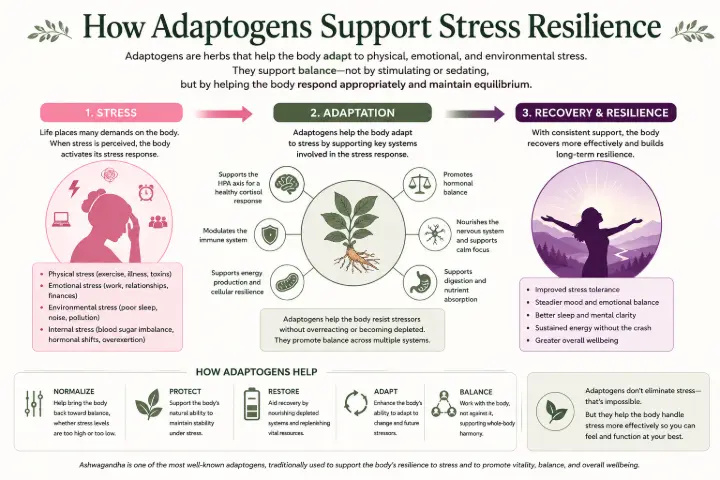
Stress is more than an emotional experience. From a physiological perspective, it is the body's response to anything that disrupts its normal state of balance—including lack of sleep, illness, injury, emotional strain, poor nutrition, chronic pain, blood sugar fluctuations, or major life changes.
When the brain detects a stressor, it activates a coordinated response involving the nervous system and endocrine system. Heart rate increases, stored glucose is released for energy, alertness improves, and blood flow shifts toward the muscles. These changes help the body respond quickly to immediate challenges.
This response is essential for survival. The problem arises when stress becomes chronic.
Modern life often exposes us to ongoing demands that leave little time for recovery. Persistent work pressures, inadequate sleep, caregiving responsibilities, chronic illness, financial concerns, and constant screen time can keep the body's stress response activated for weeks, months, or even years.
Over time, prolonged stress may influence sleep quality, mood, concentration, digestion, metabolism, immune function, and hormone balance. Because these systems communicate continuously, changes in one area often create ripple effects throughout the body.
This interconnected view of health reflects both modern physiology and traditional herbal medicine, which recognize that lasting wellness depends on supporting the body's ability to regulate and adapt—not simply treating isolated symptoms.
Understanding the HPA Axis
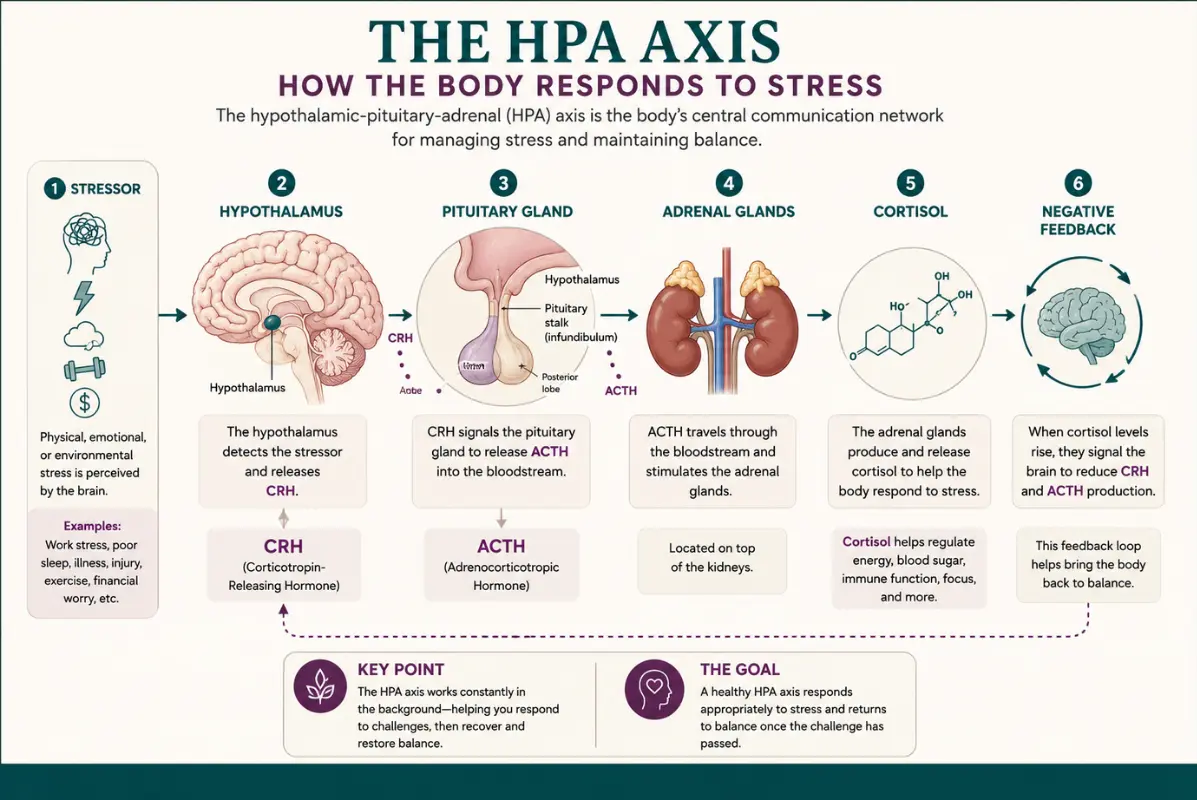
One of the body's primary stress-regulation systems is the hypothalamic-pituitary-adrenal (HPA) axis, a communication network linking the brain and adrenal glands.
When the brain perceives a stressor, the hypothalamus signals the pituitary gland, which then signals the adrenal glands to produce cortisol.
Although cortisol is often called the "stress hormone," it serves many essential functions. It helps regulate metabolism, blood sugar, immune activity, blood pressure, memory, and the body's natural sleep-wake cycle.
Healthy cortisol follows a daily rhythm. Levels rise in the morning to promote alertness and gradually decline throughout the day, reaching their lowest point at night to support restful sleep.
During short periods of stress, cortisol temporarily increases to help the body meet immediate demands. Once the challenge has passed, a sophisticated feedback system reduces cortisol production and restores normal balance.
Chronic stress, however, can interfere with this finely tuned communication network. Researchers now recognize that maintaining a healthy cortisol rhythm may be just as important as the total amount of cortisol produced.
This distinction helps explain why Ashwagandha has attracted considerable scientific interest. Rather than simply lowering cortisol, current evidence suggests it may help support healthy regulation of the HPA axis and the body's natural stress response.
What Does the Research Show?
Ashwagandha is now one of the most extensively studied adaptogenic herbs. Over the past two decades, numerous randomized, placebo-controlled clinical trials have evaluated its effects on stress, sleep, mood, cognitive performance, physical recovery, and overall wellbeing.
Although study designs and extract preparations vary, several consistent findings have emerged.
Supporting a Healthy Stress Response
The strongest evidence relates to stress management.
Across multiple clinical trials, participants taking standardized Ashwagandha extracts have reported greater improvements in perceived stress than those receiving a placebo. Several studies have also observed improvements in healthy cortisol regulation among adults experiencing chronic stress.
Importantly, these findings should not be interpreted as evidence that cortisol should be suppressed. Cortisol remains essential for normal metabolism, immune function, cardiovascular health, and maintaining healthy circadian rhythms. Instead, current evidence suggests Ashwagandha may help the body regulate its stress response more efficiently through support of the HPA axis.
Sleep and Emotional Wellbeing
Because stress and sleep are closely connected, researchers have also investigated Ashwagandha's effects on sleep quality.
Several clinical trials and systematic reviews have found improvements in perceived sleep quality, reduced time to fall asleep, and greater overall sleep satisfaction among adults experiencing stress-related sleep disturbances.
Researchers believe these improvements result from healthier stress regulation rather than direct sedation. In other words, Ashwagandha appears to support the body's natural sleep processes instead of forcing sleep.
Many participants also report feeling calmer, more emotionally resilient, and better able to manage everyday stress.
Energy, Performance, and Recovery
Unlike stimulant-based energy products, Ashwagandha does not temporarily override fatigue.
Instead, by supporting the body's ability to adapt to ongoing stress, it may promote more consistent energy and recovery over time.
Clinical studies have reported improvements in muscle strength, exercise recovery, cardiorespiratory endurance, and perceived fatigue among healthy adults using standardized Ashwagandha extracts.
These findings suggest that when the body's stress-response systems function more efficiently, improvements in resilience, recovery, and vitality may naturally follow.
Beyond Stress
Scientists continue to investigate Ashwagandha's potential role in several additional areas of health, including:
- Cognitive function
- Healthy inflammatory responses
- Immune regulation
- Blood sugar metabolism
- Male reproductive health
- Female sexual wellbeing
- Healthy thyroid function in select individuals under medical supervision
While many of these findings are encouraging, research remains ongoing. Most published studies are relatively short-term and use specific standardized extracts, so additional research involving larger populations will continue refining our understanding of Ashwagandha's potential benefits.
Overall, however, the current body of evidence supports what traditional herbalists have observed for centuries: Ashwagandha appears to help the body adapt to stress while promoting resilience and overall wellbeing.
Choosing a Quality Ashwagandha Supplement
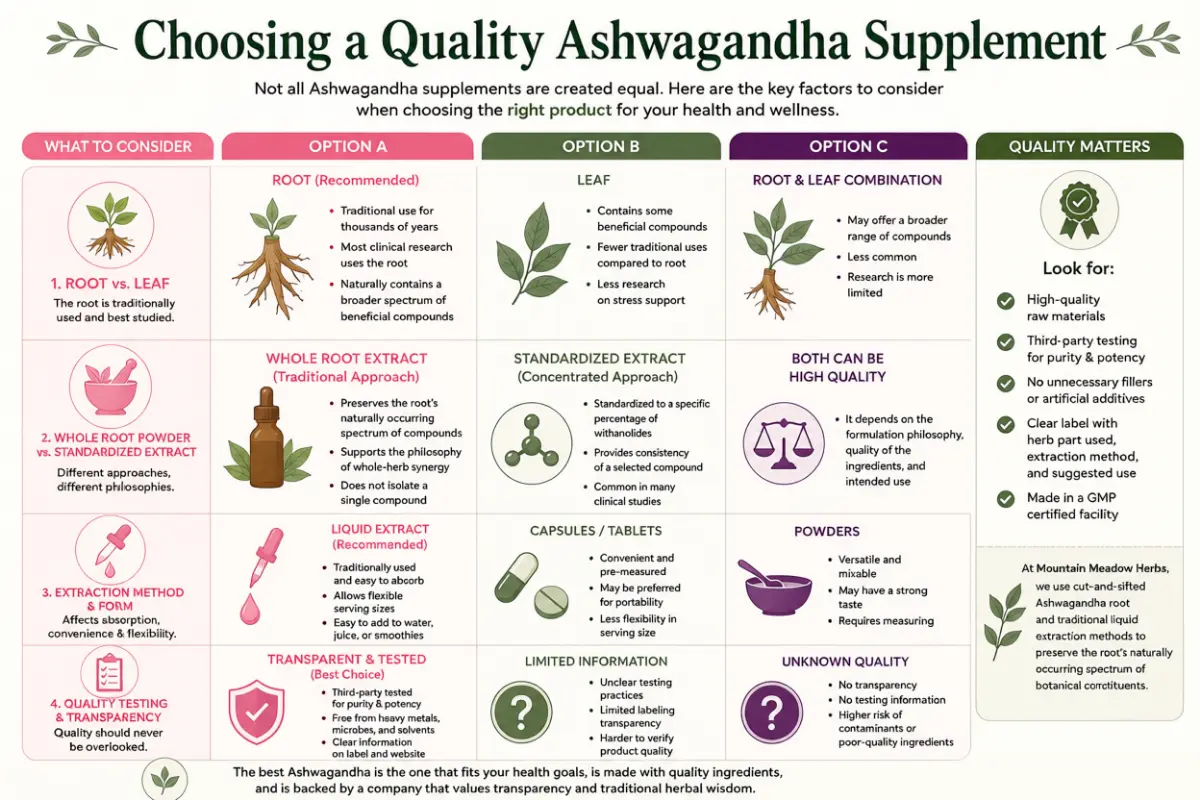
As Ashwagandha has grown in popularity, so have the number of products available. Capsules, powders, tinctures, teas, gummies, and standardized extracts all contain Ashwagandha, but they are not identical. Differences in the plant material, extraction methods, and manufacturing standards can influence the consistency and quality of the finished product.
Understanding a few key principles can help consumers make informed choices.
Root vs. Leaf
Traditionally, Ashwagandha root has been the primary part of the plant used in Ayurvedic medicine, and most clinical research on stress, sleep, and healthy cortisol regulation has evaluated standardized root extracts.
Some modern supplements also include leaf material because it naturally contains higher concentrations of certain compounds, including withanolides. While leaf extracts continue to be studied, they have not been researched as extensively for the traditional applications discussed in this article.
Whole Root vs. Standardized Extract
Whole root preparations and standardized extracts represent two different approaches to herbal formulation.
Whole root preparations preserve the plant's naturally occurring spectrum of compounds but may vary somewhat between harvests because of differences in climate, soil, and growing conditions.
Standardized extracts are manufactured to provide consistent levels of selected compounds, making them valuable for scientific research and product consistency.
Neither approach is inherently superior. The best choice depends on the formulation philosophy, intended use, and overall quality of the finished product.
Understanding Withanolides
Many Ashwagandha supplements are labeled with statements such as:
- Standardized to 2.5% withanolides
- Standardized to 5% withanolides
- Standardized to 10% withanolides
Withanolides are among Ashwagandha's best-studied compounds, but they represent only part of the plant's chemistry. Researchers believe the herb's effects likely result from the interaction of many naturally occurring constituents rather than a single compound.
For this reason, a higher withanolide percentage does not automatically indicate a better product. The quality of the raw material, extraction process, and manufacturing standards are equally important.
Quality Matters
When evaluating any herbal supplement, look for products that provide:
- Botanical identity verification
- Testing for heavy metals, pesticides, and microbial contaminants
- Manufacturing in Good Manufacturing Practice (GMP) facilities
- Transparent labeling identifying the plant part used and serving size
These practices help ensure the product matches the label and meets established quality standards.
Mountain Meadow Herbs' Traditional Herbal Approach
Mountain Meadow Herbs prepares its Ashwagandha using traditionally extracted cut-and-sifted root rather than focusing on a single standardized constituent.
This approach reflects a long-standing principle of traditional herbal medicine: the therapeutic value of an herb comes from the naturally occurring balance of compounds within the medicinal portion of the plant.
Standardized extracts play an important role in research and manufacturing consistency, while traditional whole-root extracts emphasize preserving the plant's natural complexity. These approaches represent different formulation philosophies rather than competing standards of quality.
Mountain Meadow Herbs also prepares Ashwagandha as a liquid extract, allowing flexible serving sizes and a convenient alternative for individuals who prefer not to take capsules.
Who Should Use Caution?
Ashwagandha has a long history of traditional use and has demonstrated a favorable safety profile in many clinical studies. Like any biologically active herb, however, it is not appropriate for everyone.
Consult a qualified healthcare provider before using Ashwagandha if you:
- Have a thyroid disorder
- Have an autoimmune condition
- Take prescription medications, particularly those affecting blood sugar, blood pressure, thyroid function, immune activity, or sleep
- Are preparing for surgery
Although side effects are generally uncommon and usually mild, digestive upset, loose stools, nausea, or drowsiness may occur in some individuals. Discontinue use and consult a healthcare professional if unexpected symptoms develop.
Frequently Asked Questions:
How long does it take for Ashwagandha to work?
Ashwagandha is intended to support the body's long-term ability to adapt to stress rather than produce immediate effects. Many clinical studies report gradual improvements over 8 to 12 weeks, although individual responses vary.
Can Ashwagandha be taken every day?
Many clinical studies have evaluated daily use for several weeks or months with a favorable safety profile when used appropriately. Follow product directions and consult your healthcare provider if you have medical conditions or take prescription medications.
Is Ashwagandha a stimulant?
No. Unlike caffeine, Ashwagandha does not directly stimulate the nervous system. It is considered an adaptogen that supports the body's natural stress-response systems.
Can I take Ashwagandha while breastfeeding?
Research on Ashwagandha during breastfeeding remains limited.
Mountain Meadow Herbs' liquid Ashwagandha extract has been formulated for use by breastfeeding mothers and is considered compatible with breastfeeding when used as directed. As with any dietary supplement, nursing mothers should discuss herbal supplementation with their healthcare provider, particularly when caring for newborn or medically complex infants.
Why does Mountain Meadow Herbs use a liquid extract instead of capsules?
Mountain Meadow Herbs prepares its Ashwagandha using cut-and-sifted Ashwagandha root through traditional liquid extraction methods. Liquid herbal supplements are up to 70% more effective than capsules or dried counterparts.
Liquid extracts allow flexible serving sizes, are easy to incorporate into daily routines, and preserve the naturally occurring spectrum of botanical constituents found within the root. This approach reflects Mountain Meadow Herbs' commitment to traditional herbal formulation while maintaining high standards for quality and consistency.
Is standardized extract better than a traditional root extract?
Not necessarily. Standardized extracts and traditional root extracts reflect different approaches to herbal formulation. Standardized extracts provide consistency for research and manufacturing, while traditional root extracts emphasize preserving the naturally occurring complexity of the plant. The best choice depends on the intended use, formulation philosophy, and product quality.
Herbal Support:
Supporting the body’s natural balance often begins with strengthening foundational systems such as digestion, stress regulation, sleep, circulation, detoxification, and nutrient support. Because the body’s systems are deeply interconnected, even small areas of imbalance can influence energy, hormone signaling, recovery, and overall wellness.
Herbal support may provide gentle, supportive nourishment alongside healthy daily habits. Thoughtfully formulated herbal extracts and wellness products can help support the body’s natural rhythms and resilience while working in harmony with lifestyle practices that promote long-term wellbeing.
Below, you will find a selection of herbal formulas designed to support this area of health naturally and holistically.
Below you will find our products formulated with Ashwagandha root.
Continue Exploring Herbal Wellness
Understanding Ashwagandha is only one part of understanding how the body responds to stress. Because stress influences sleep, hormones, metabolism, digestion, immune function, and energy production, supporting overall wellness often requires a broader perspective.
Explore these related Mountain Meadow Herbs articles to learn more about:
- Adaptogens
- Chronic Stress
- Hormone Balance
- Circadian Rhythm
- Sleep
- Metabolism & Blood Sugar
- Autoimmune Health
Together, these topics provide a more complete picture of how the body's interconnected systems work to maintain health and resilience.
Final Thoughts
Ashwagandha has earned its reputation through centuries of traditional use and an expanding body of modern scientific research. While no single herb can eliminate the challenges of daily life, Ashwagandha continues to demonstrate remarkable potential for supporting the body's natural ability to adapt to stress.
Rather than forcing the body in one direction, Ashwagandha is traditionally valued for supporting balance. By promoting healthy regulation of the body's stress-response systems, it may contribute to improved resilience, restful sleep, emotional wellbeing, cognitive performance, and overall vitality.
This systems-based approach reflects an important principle of herbal medicine: the body's major systems are deeply interconnected. Supporting one area of health often benefits many others because hormones, metabolism, immune function, digestion, sleep, and the nervous system continuously influence one another.
As research continues to evolve, Ashwagandha remains one of the best examples of where traditional herbal wisdom and modern science intersect. Ancient practitioners observed its ability to promote strength, recovery, and resilience long before today's understanding of physiology. Modern clinical research is increasingly helping explain the biological mechanisms behind those observations.
Whether you're exploring Ashwagandha to support stress management, improve sleep quality, enhance resilience, or simply learn more about herbal medicine, choosing a high-quality product and working with a knowledgeable healthcare professional can help you determine whether it fits your individual wellness goals.
At Mountain Meadow Herbs, our commitment is not simply to provide herbal products, but to educate consumers about the remarkable relationship between plants and human health. By combining traditional herbal knowledge with current scientific understanding, we hope to help individuals make informed decisions that support long-term wellness.
References:
- National Center for Complementary and Integrative Health. Ashwagandha: Usefulness and Safety. U.S. Department of Health and Human Services. Updated 2024.
- Panossian A, Wikman G. Effects of adaptogens on the central nervous system and the molecular mechanisms associated with their stress-protective activity. Pharmaceuticals. 2010;3(1):188–224.
- Lopresti AL, Smith SJ, Malvi H, Kodgule R. An investigation into the stress-relieving and pharmacological actions of an Ashwagandha extract: A randomized, double-blind, placebo-controlled study. Medicine (Baltimore). 2019;98(37):e17186.
- Chandrasekhar K, Kapoor J, Anishetty S. A prospective, randomized double-blind, placebo-controlled study of safety and efficacy of a high-concentration full-spectrum Ashwagandha root extract in reducing stress and anxiety. Indian Journal of Psychological Medicine. 2012;34(3):255–262.
- Salve J, Pate S, Debnath K, Langade D. Adaptogenic and anxiolytic effects of Ashwagandha root extract in healthy adults with stress: A randomized, double-blind, placebo-controlled clinical study. Cureus. 2019;11(12):e6466.
- NIH National Library of Medicine. Endotext: Physiology of the Hypothalamic-Pituitary-Adrenal Axis.
- National Institutes of Health. Office of Dietary Supplements and National Library of Medicine resources on botanical supplements and herbal pharmacology.
- Bonilla DA, Moreno Y, Gho C, et al. Effects of Ashwagandha (Withania somnifera) on physical performance: A systematic review and Bayesian meta-analysis. Journal of Functional Morphology and Kinesiology. 2021;6(1):20.
- Verma N, Gupta SK, Tiwari S, et al. Effects of Ashwagandha supplementation on cognitive function, stress, and sleep: A systematic review and meta-analysis of randomized controlled trials. Nutrients. 2025.
- National Institute of Diabetes and Digestive and Kidney Diseases. Your Endocrine System & How It Works.
- StatPearls Publishing. Physiology, Cortisol. Updated regularly through the National Center for Biotechnology Information (NCBI Bookshelf).
- Mishra LC, Singh BB, Dagenais S. Scientific basis for the therapeutic use of Withania somnifera (Ashwagandha): A review. Alternative Medicine Review. 2000;5(4):334–346.
Disclaimer:
This content is intended for educational purposes only and is not a substitute for professional medical advice. These statements have not been evaluated by the Food and Drug Administration. Mountain Meadow Herbs products are not intended to diagnose, treat, cure, or prevent any disease. We recommend consulting with a qualified healthcare provider before beginning any new wellness routine, especially if you are pregnant, nursing, have a medical condition, or are taking medications.
© 2026 Mountain Meadow Herbs. All rights reserved. This content may not be reproduced, distributed, or transmitted in any form without prior written permission.