
Why the Sunshine Vitamin Deserves a Closer Look
Vitamin D has earned its sunny nickname because our skin can produce it when exposed to ultraviolet B (UVB) light. But there is more to this nutrient than sunlight and strong bones. Vitamin D acts as a precursor to a hormone, helping the body manage essential minerals and influencing functions in many tissues.
Short winter days, time indoors, age, skin pigmentation, and limited sun exposure can all affect vitamin D production. Yet getting enough vitamin D is only part of the picture. Its work is closely connected with calcium, vitamin K, and magnesium. Understanding those partnerships can help you make thoughtful choices about foundational nutrition—not just seasonal supplements.
From Sunlight to Hormone: What Happens to Vitamin D?
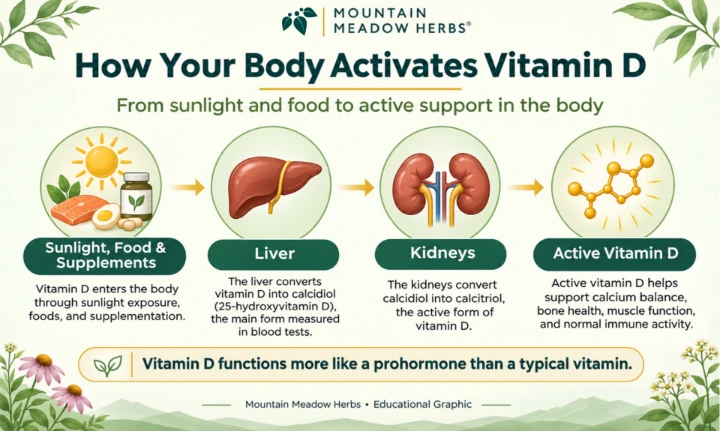
Vitamin D comes from sunlight, certain foods, and supplements. Whether it starts in your skin or arrives through your diet, it must be converted before it can carry out its best-known functions. The liver first changes it into 25-hydroxyvitamin D, also called calcidiol. The kidneys then make much of the active form, calcitriol, although other tissues can also activate vitamin D locally.
Calcitriol binds to vitamin D receptors inside cells and helps regulate genes involved in mineral balance and other physiological processes. This is why vitamin D behaves differently from a nutrient that simply supplies energy or forms part of a structure. Its active form serves as a chemical messenger, with particularly important effects on calcium and phosphorus regulation.¹
Vitamin D and Calcium: Absorption Is Only the Beginning
Calcium builds the mineral framework of bones and teeth, but it also has immediate jobs in muscle contraction, nerve communication, and blood clotting. The body therefore keeps blood calcium within a narrow range. When needed, hormones—including parathyroid hormone and active vitamin D—help regulate calcium absorption, movement, and storage.
Vitamin D increases the intestine’s ability to absorb calcium from food. Most of the body’s calcium is stored in the skeleton, which also serves as a reserve. That is why maintaining normal blood calcium does not necessarily mean someone is getting enough calcium over time. Bone health depends on adequate dietary calcium, vitamin D status, physical activity, and other factors working together.²
Food provides an important foundation for calcium intake, with sources extending well beyond dairy products. Leafy greens such as kale, collards, turnip greens, and bok choy offer plant-based calcium alongside other valuable nutrients. Broccoli, sesame seeds, and calcium-fortified plant milks provide additional options. Interestingly, calcium from certain low-oxalate vegetables is particularly well absorbed, while high-oxalate greens such as spinach contain calcium that is less readily available to the body.
Mountain Meadow Herbs' Herbal Calcium offers another plant-based approach to supporting bone and mineral wellness. Its botanical blend is traditionally used to support healthy bones and teeth, while also providing calming support for relaxation and normal muscle and nervous system function. Rather than supplying a standardized calcium dose, Herbal Calcium is intended to complement a calcium-rich diet and the body's natural nutritional processes.
Vitamin K2—Another Important Piece of the Puzzle
Vitamin K is best known for its role in normal blood clotting, but it also participates in bone metabolism. Vitamin K1 is found predominantly in leafy green vegetables, while Vitamin K2 refers to a family of compounds called menaquinones, found in certain animal products and fermented foods.
One particularly interesting form of Vitamin K2 is menaquinone-7 (MK-7). Natto, a traditional Japanese food made from fermented soybeans, is especially rich in MK-7, while aged cheeses contain various forms of Vitamin K2. Unlike the shorter-acting MK-4 form, MK-7 remains in circulation longer, making it an appealing choice for nutritional supplementation.
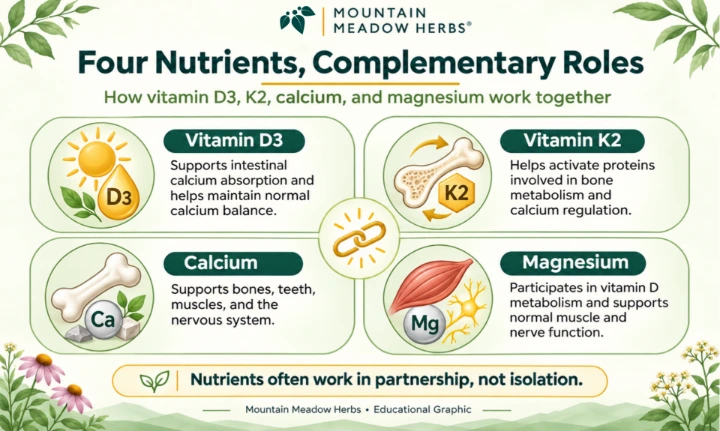
Vitamin K helps activate proteins involved in calcium regulation, including osteocalcin, which participates in bone mineralization, and matrix Gla protein (MGP), which helps regulate mineralization in soft tissues. These functions complement Vitamin D's role in calcium absorption and help explain why D3 and K2 are frequently combined in supplements.
However, while these physiological relationships are well established, research has not conclusively demonstrated that K2 supplementation prevents calcium buildup in arteries or improves bone density in everyone. Understanding how nutrients function in the body is not the same as proving specific supplementation outcomes.³
MMH's Sunshine Drops combines vegan Vitamin D3 from lichen with Vitamin K2 (MK-7), bringing together two nutrients involved in normal calcium and bone metabolism. It offers a convenient way to complement dietary intake when supplementation is appropriate.
Magnesium: The Often-Overlooked Partner
Magnesium is involved in hundreds of enzyme reactions and contributes to normal nerve, muscle, and bone function. It also participates in the enzymes and pathways that process vitamin D. Researchers have examined how magnesium status may influence vitamin D metabolism, although that does not mean everyone needs a magnesium supplement to make vitamin D work.⁴
Whole foods such as pumpkin seeds, legumes, nuts, leafy greens, and whole grains offer magnesium along with other nutrients. The broader lesson is balance: calcium, magnesium, and vitamin D each have distinct roles, and adequate intake matters more than chasing a single “miracle” nutrient.
Vitamin D—Beyond the Skeleton
Vitamin D receptors are found in many tissues, including cells involved in immune function. Vitamin D contributes to normal immune signaling and muscle function, making adequate status important well beyond childhood bone development. Researchers are also studying connections between vitamin D status and emotional well-being.
Still, association is not proof of treatment benefit. Low vitamin D levels have been observed in some people with mood concerns, but clinical studies have not consistently shown that taking extra vitamin D improves depression. Likewise, more is not automatically better for immune health. The strongest practical message is to meet nutritional needs without assuming supplements can correct every symptom.¹
This whole-body perspective complements our discussion of the relationship between the immune system and other body systems, while keeping the focus here on everyday nutritional sufficiency.
What Happens When Vitamin D Levels Are Too Low?
Vitamin D deficiency often develops without obvious symptoms. Over time, however, inadequate levels can interfere with calcium absorption and normal bone mineralization. Possible effects include muscle weakness, bone discomfort, fatigue, and an increased risk of fractures. Severe deficiency can lead to osteomalacia, a condition in adults characterized by softened, weakened bones.
When calcium absorption declines, the body may compensate by increasing parathyroid hormone production, drawing calcium from skeletal reserves to maintain normal blood calcium levels. This illustrates why adequate Vitamin D is important for maintaining healthy bones even when routine blood calcium measurements appear normal.
Researchers have also identified associations between low Vitamin D status and changes in mood and immune health, although these relationships are complex and do not necessarily establish cause and effect.
Are You Getting Enough Vitamin D?
Fatty fish and fortified foods provide dietary vitamin D, while eggs offer smaller amounts. Supplements may contain D2 or D3; both can raise vitamin D status, although D3 often raises blood 25-hydroxyvitamin D more effectively. Needs vary with age, sun exposure, diet, health conditions, and other factors.
A blood test measuring 25-hydroxyvitamin D can help assess status when testing is clinically appropriate. Routine testing is not necessary for every healthy person, so ask a healthcare professional whether it makes sense for you. High supplemental intakes can cause excessive blood calcium and harm the kidneys. People with kidney disease, certain calcium disorders, or medications that affect calcium balance should seek individualized advice. Vitamin K-containing supplements also require special care for anyone taking warfarin.¹
If your goal is steadier year-round nutrition, start by reviewing food choices and your actual needs before selecting a supplement. You may also enjoy our article on how nutrition and immune regulation intersect in Hashimoto’s disease, where vitamin D is one part of a broader nutritional conversation.
A Whole-Body Approach, Season After Season
Vitamin D may be famous for its connection to sunshine, but its everyday work relies on partnerships. Calcium supplies essential mineral structure, vitamin D supports absorption and balance, vitamin K activates key proteins, and magnesium participates in the processes that keep these systems functioning.
No single product replaces a varied diet, movement, appropriate sunlight habits, or individualized care. By understanding how these nutrients cooperate—and exploring supportive options such as Sunshine Drops and Herbal Calcium with realistic expectations—you can make more informed choices for long-term wellness. Continue exploring the connections between nutrition, immunity, and the body’s natural regulatory systems through MMH’s educational resources.
Vitamin D, K2, and Calcium: Common Questions Answered
Is vitamin D actually a hormone or a vitamin?
Vitamin D is classified as a fat-soluble vitamin, but its active form functions as a hormone. The distinction matters because sunlight, food, or supplements provide a precursor that must be processed in the body before it carries out many of its functions.
The liver produces 25-hydroxyvitamin D, and the kidneys produce much of the active hormone calcitriol. Calcitriol then helps regulate mineral balance through cellular receptors. This is why vitamin D is often discussed in both nutritional and endocrine contexts: it enters the body as a nutrient or is made in the skin, then acts as a messenger.
Should I take vitamin D3 and vitamin K2 together?
You do not have to take D3 and K2 together for vitamin D to work. Both nutrients have roles in bone-related physiology, which explains why some supplements combine them, but taking the combination is not necessary for everyone.
Vitamin D supports calcium absorption; vitamin K is required to activate certain proteins involved in bone metabolism. Evidence is still developing on whether adding K2 to D3 produces extra clinical benefits for particular groups. Check your total intake from food and supplements, and speak with your clinician before using K2 if you take warfarin or a similar vitamin K-antagonist medication.
Can I get enough vitamin D from sunlight during winter?
It depends on where you live and how much UVB light reaches your skin. At higher latitudes, especially in winter, sunlight may not be strong enough for substantial skin production of vitamin D during parts of the season.
Cloud cover, time outdoors, skin coverage, skin pigmentation, and age also influence production. Because ultraviolet exposure can damage skin, deliberately tanning is not a recommended way to meet vitamin D needs. Foods and appropriately chosen supplements provide alternatives when sun exposure is limited. Rather than guessing from the season alone, consider your diet, individual risk factors, and whether a healthcare professional recommends testing.
Can you have normal blood calcium but still have low vitamin D?
Yes. Blood calcium is tightly regulated, so a normal calcium result does not rule out low vitamin D status or inadequate calcium intake. The body uses hormonal controls to maintain circulating calcium for essential processes such as nerve signaling and muscle activity.
Because the skeleton stores most of the body’s calcium, blood calcium alone does not show how well bones have been supported over time. Vitamin D status is generally evaluated with a different blood test—25-hydroxyvitamin D—when indicated. Bone health assessment may also consider dietary patterns, age, fracture risk, physical activity, and, in some people, bone-density testing.
How does magnesium affect vitamin D absorption and activation?
Magnesium does not simply “absorb” vitamin D for you. Instead, it helps support biochemical processes involved in vitamin D metabolism, including enzyme activity that contributes to vitamin D activation and regulation.
Magnesium also participates in normal muscle, nerve, and bone function, so the partnership extends beyond any single pathway. If your diet regularly includes nuts, seeds, legumes, whole grains, and greens, you may already be getting meaningful magnesium. Some medical conditions and medications can alter magnesium status. More supplementation is not automatically beneficial, particularly for people with impaired kidney function, who should seek professional guidance before adding magnesium.
What is the difference between D2 and D3 supplements?
Vitamin D2 (ergocalciferol) and vitamin D3 (cholecalciferol) are both forms of vitamin D used in foods and supplements. Both can increase blood vitamin D concentrations, but research often finds D3 more effective at raising or sustaining 25-hydroxyvitamin D levels.
D3 is commonly derived from lanolin, although vegan D3 can be produced from lichen. MMH Sunshine Drops uses lichen-derived D3 and includes K2. Choosing a product should involve more than the form alone: the amount per serving, any additional ingredients, existing supplements, medications, and your individual needs all matter. Follow label instructions and discuss higher-dose use with a healthcare professional.
Herbal Support:
Supporting the body’s natural balance often begins with strengthening foundational systems such as digestion, stress regulation, sleep, circulation, detoxification, and nutrient support. Because the body’s systems are deeply interconnected, even small areas of imbalance can influence energy, hormone signaling, recovery, and overall wellness.
Herbal support may provide gentle, supportive nourishment alongside healthy daily habits. Thoughtfully formulated herbal extracts and wellness products can help support the body’s natural rhythms and resilience while working in harmony with lifestyle practices that promote long-term wellbeing.
Below, you will find a selection of herbal formulas designed to support this area of health naturally and holistically.
Disclaimer:
This content is intended for educational purposes only and is not a substitute for professional medical advice. These statements have not been evaluated by the Food and Drug Administration. Mountain Meadow Herbs products are not intended to diagnose, treat, cure, or prevent any disease. We recommend consulting with a qualified healthcare provider before beginning any new wellness routine, especially if you are pregnant, nursing, have a medical condition, or are taking medications.
© 2026 Mountain Meadow Herbs. All rights reserved. This content may not be reproduced, distributed, or transmitted in any form without prior written permission.