In today’s world, many people live with a quiet but persistent feeling of being off. Tired, but unable to fully rest. Wired, but without real energy. Doing all the right things—yet still not feeling balanced. Often, the missing piece is not what you are doing, but the state your body is in. The nervous system plays a central role in how you feel day to day.
What “Tired but Wired” Really Means
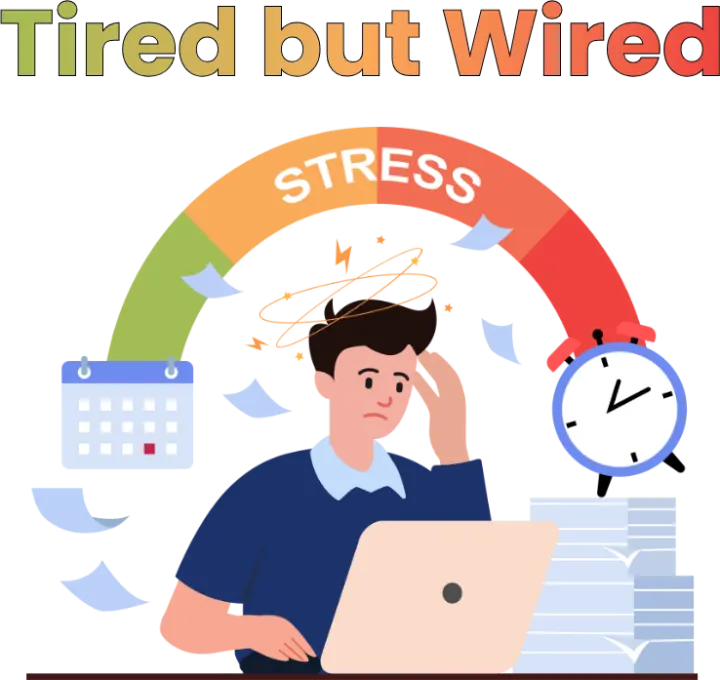
When your body is stuck in a stress-dominant state, it doesn’t fully power down—even when you’re exhausted. You may feel physically tired, but mentally alert, lying down at night only to have your mind begin racing.
This happens because your nervous system is still receiving signals that it is not safe to rest. Over time, this pattern can leave you feeling depleted, even when you’re trying to do everything right.
Understanding the Body’s Two Modes

The body is designed to move between two primary states: the sympathetic nervous system, often referred to as “fight or flight,” and the parasympathetic nervous system, known as “rest and digest.” These systems work together to help the body respond to stress and then return to a state of repair and balance.
When these systems are functioning well, the body can handle challenges and then recover appropriately. When balance is disrupted, the body may remain in a heightened stress state longer than intended.
The Sympathetic State: Always On
When the sympathetic nervous system is active, the body prepares for action. Heart rate increases, breathing becomes more shallow, and stress hormones rise. At the same time, digestion slows, as the body prioritizes immediate survival over long-term maintenance.
This response is helpful in short bursts, but modern life often keeps people in this state for extended periods of time.
The Parasympathetic State: Where Healing Happens
In contrast, the parasympathetic state is where the body repairs and restores. Heart rate slows, breathing deepens, digestion improves, and the body is able to carry out essential maintenance functions.
This is the state where true healing, recovery, and balance take place.
The Cycle That Keeps You Stuck
Stress does not just affect how you feel in the moment—it creates a ripple effect throughout the body. When the stress response remains active for too long, multiple systems begin to feel the strain.
Sleep is often one of the first areas affected. The body has a harder time fully relaxing, leading to lighter, less restorative sleep. Even when you spend enough time in bed, you may wake feeling tired.
Poor sleep then feeds back into the stress response, increasing stress hormones and making it more difficult to shift out of a heightened state of alertness the next day. Over time, this ongoing stress can influence hormonal rhythms, affecting mood, energy, and overall balance.
Digestion may also become less efficient, as the body continues to prioritize stress response over rest-and-digest functions.
This creates a cycle:
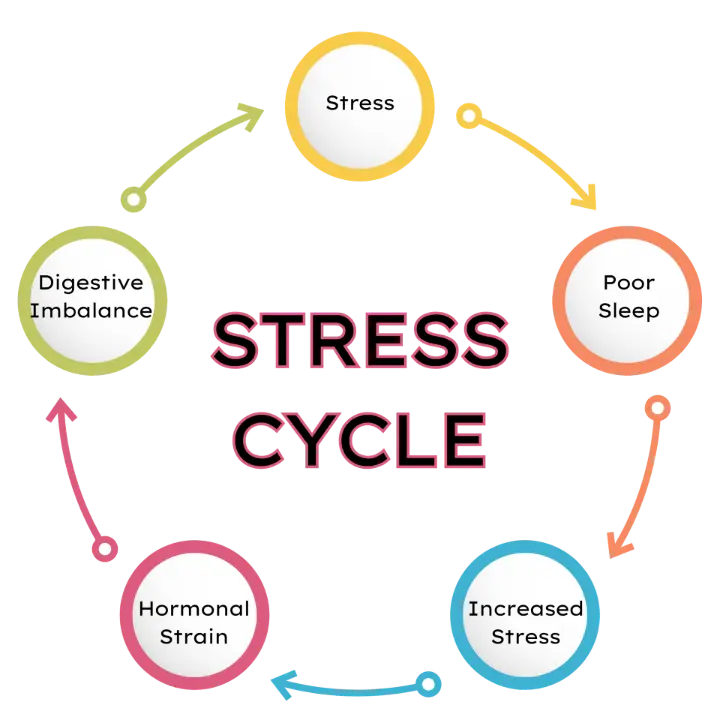
Over time, this loop can leave you feeling stuck—unable to fully rest, but also unable to regain consistent energy.
Signs You May Be Stuck in a Stress-Dominant State
While stress can look different for each person, there are common patterns that may suggest your body is spending more time in a heightened state of alertness than it was designed to.
You may notice:
- Feeling tired, but unable to fully relax
- Difficulty falling or staying asleep
- Waking unrefreshed, even after a full night in bed
- Increased reliance on caffeine or sugar for energy
- Feeling easily overwhelmed, anxious, or “on edge”
These patterns are often subtle at first, but over time they can become more persistent—especially when the body is not given consistent opportunities to shift into a state of rest and repair.
Many of these patterns become most noticeable at night, when the body should naturally be preparing for rest.
Why the Nervous System Affects Everything
The nervous system does not operate in isolation—it influences nearly every system in the body. When the body remains in a stress-dominant state, digestion can become less efficient, nutrient absorption may decline, hormonal rhythms can shift, and sleep cycles may be disrupted.
This is why supporting the nervous system is often one of the most effective first steps in restoring balance across multiple areas of health.
Because the nervous system plays such a central role, restoring balance often begins here. Rather than trying to address each symptom individually, supporting the body’s ability to shift out of stress can create positive changes across multiple systems at once.
In the articles that follow, we will take a closer look at how this pattern affects sleep, hormones, and digestion—and what you can do to support each one.
Where Support May Be Helpful
While simple daily practices are the foundation of nervous system health, some individuals benefit from additional support—especially during periods of prolonged or chronic stress.
The goal is not to force the body to “shut down,” but to gently support its ability to regulate, adapt, and return to a more balanced rhythm.
This often involves supporting three key areas:
- maintaining a calm, steady state during the day
- reducing the cumulative effects of stress over time
- easing the transition into restful sleep at night
Herbal support can play a meaningful role in this process.
Formulas such as Stress & Sleep are designed to support a calm, steady nervous system throughout the day—helping reduce the buildup of tension that often interferes with sleep later on.
For deeper, foundational support, Adrenal Aid may help the body better respond to ongoing stress and support more balanced energy throughout the day.
When it comes time to rest, Bed-Time Drops offer gentle, non-habit forming support to help the body transition more easily into sleep—without next-day grogginess.
For those who prefer a simpler approach, single herbs such as Passionflower have traditionally been used to promote relaxation, support emotional balance, and encourage a more natural sleep cycle.
These types of support are most effective when used alongside consistent daily practices that signal safety to the body—creating a more complete and sustainable approach to restoring balance.
Simple Ways to Shift Your Body Out of Stress Mode
The body does not shift out of stress simply by thinking differently—it shifts when it receives signals of safety. Simple, consistent practices can help guide the body back into a calm, restorative state over time.
Repetitive, rhythmic activities such as knitting, coloring, or simple crafts can help regulate breathing and quiet the mind. Gentle movement like walking, gardening, or stretching supports circulation and helps the body transition out of a stress-dominant state.
Practices such as slow breathing, sitting quietly, or placing your hands on your chest or abdomen can directly signal the nervous system to relax. Even small sensory experiences—like holding a warm drink, sitting in sunlight, or wrapping in a blanket—can reinforce a sense of safety and calm.
A Gentle Reminder
The goal is not to eliminate stress completely—it is to help your body move in and out of stress more naturally. Small, consistent moments of calm can help retrain the nervous system over time.
Balance does not come from doing more. It comes from helping the body return to what it was designed to do.
One of the first places this shift—or lack of it—becomes noticeable is in your sleep. When the body remains in a stress-dominant state, it becomes more difficult to fully relax at night, often leading to the feeling of being “tired but wired.”
Even when you’re exhausted, your body may struggle to shift into the deeper, restorative state it needs.
In the next article, we’ll take a closer look at how sleep regulates hormones, energy, and healing—and why improving sleep is often the first step in restoring balance.
FAQ
What does it mean to feel 'tired but wired'
It reflects a nervous system that remains active even when the body is fatigued.
How can I support my nervous system naturally?
Through consistent practices like movement, breathing, and creating moments of calm. .
How long does it take to see improvement?
With consistent support, many people begin to notice small shifts within a few days to a couple of weeks—such as feeling more relaxed in the evening or falling asleep more easily.
More meaningful, lasting improvements in sleep, energy, and overall balance often develop gradually over several weeks as the nervous system begins to regulate and the body re-establishes a more natural rhythm.
Disclaimer:
This content is intended for educational purposes only and is not a substitute for professional medical advice. These statements have not been evaluated by the Food and Drug Administration. Mountain Meadow Herbs products are not intended to diagnose, treat, cure, or prevent any disease. We recommend consulting with a qualified healthcare provider before beginning any new wellness routine, especially if you are pregnant, nursing, have a medical condition, or are taking medications.
© 2026 Mountain Meadow Herbs. All rights reserved. This content may not be reproduced, distributed, or transmitted in any form without prior written permission.